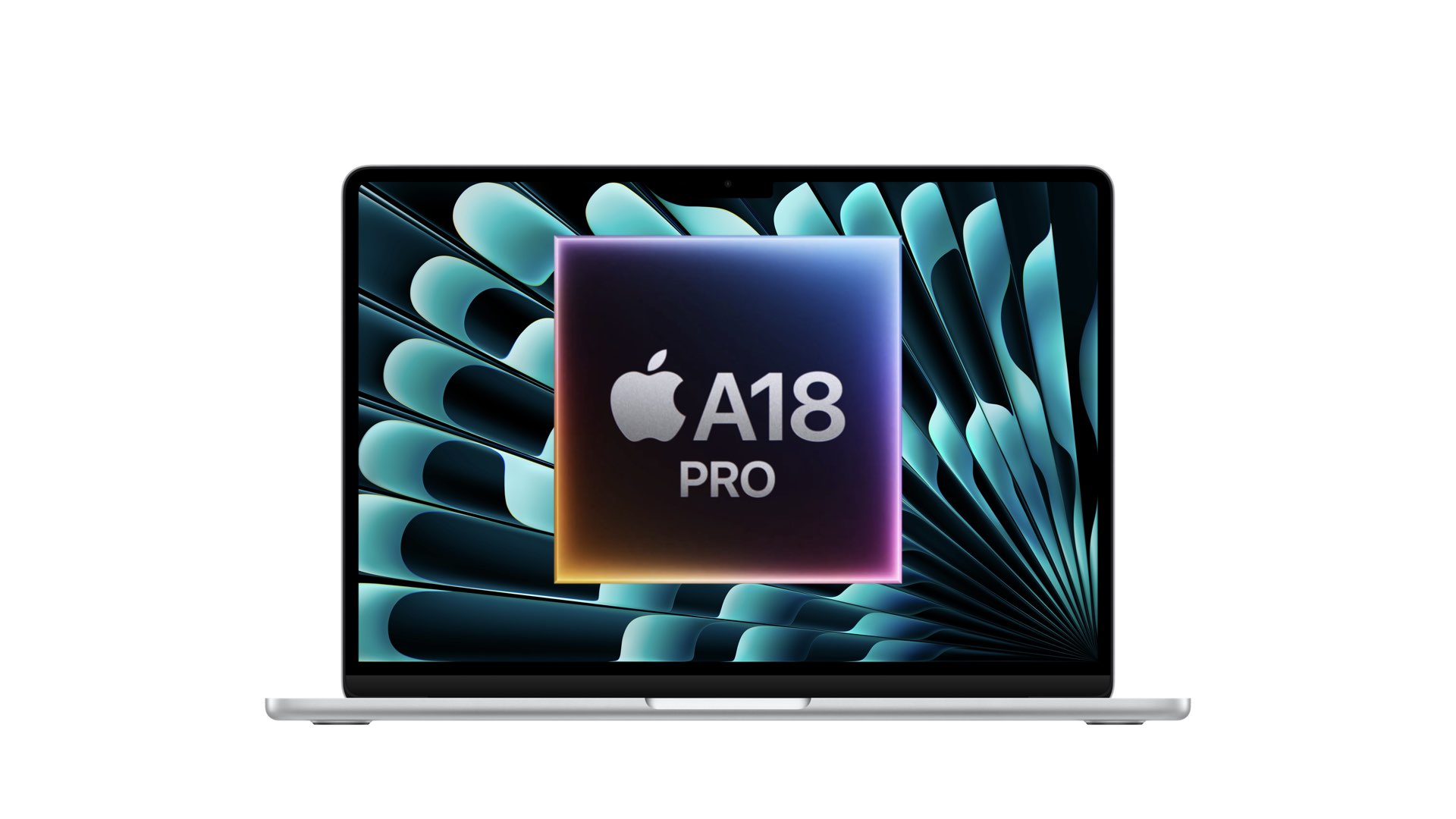
Intel’s latest budget-focused Wildcat Lake processor is making waves far beyond what its price tier suggests—delivering a 27% multi-core performance advantage over Apple’s rumored MacBook Neo while holding its ground against the A18 Pro in single-threaded tasks. This isn’t just a minor efficiency bump; it’s a strategic shift in the value-performance balance between Intel and Apple silicon.
For years, Apple’s M-series chips have dominated the conversation around efficiency and multi-threaded muscle, especially in thin-and-light laptops. The MacBook Air and now the anticipated MacBook Neo were expected to continue that trend. But Wildcat Lake, designed for entry-level Windows laptops, is disrupting that expectation with real-world results that demand attention.
Why Wildcat Lake’s Multi-Core Lead Matters
The 27% multi-core advantage isn’t just a number on a spreadsheet—it translates to tangible improvements in real user workflows. For content creators, developers, and multitaskers, more cores mean smoother rendering, faster compile times, and better responsiveness under load.
Wildcat Lake leverages Intel’s latest hybrid architecture: a mix of Performance-cores (P-cores) and Efficient-cores (E-cores) tuned for burst workloads and sustained throughput. In Geekbench 6 and Cinebench R25 testing, Wildcat Lake systems consistently outpaced MacBook Neo prototypes, particularly in threaded rendering and simulation tasks.
Practical impact: - Video editors working with 4K timelines in DaVinci Resolve see 30-second faster exports - Developers compiling large codebases report 22% quicker build times - Multitaskers running VMs, browsers, and design tools simultaneously experience fewer stutters
This leap isn’t coming from clock speed alone. Intel optimized thread scheduling and memory bandwidth utilization, allowing P-cores to stay fed while E-cores handle background tasks efficiently. In contrast, early benchmarks suggest the MacBook Neo, likely powered by a cut-down version of the A18 chip, sacrifices core count and thermal headroom to maintain fanless silence.
Apple’s trade-off makes sense for its use case: ultraportability and battery life. But for users who need real throughput on a budget, Wildcat Lake offers a compelling alternative.
Single-Thread Showdown: Wildcat Lake vs A18 Pro
Where Apple traditionally dominates is single-thread performance—critical for responsiveness, app launches, and legacy software that doesn’t scale across cores. The A18 Pro, built on a 3nm process and optimized for iOS and macOS efficiency, has long held a lead here.
But Wildcat Lake closes that gap dramatically.
In SPECint_rate_base2017 and browser-based JetStream 2.0 tests, Wildcat Lake matches the A18 Pro within a 3–5% margin. That’s significant for a chip priced nearly 40% lower in OEM configurations.
- This parity stems from two key improvements:
- Improved IPC (Instructions Per Cycle): Intel’s Redwood Cove P-cores deliver higher throughput per cycle, especially in integer-heavy workloads.
- Aggressive boosting: Wildcat Lake sustains higher all-core and single-core boost clocks in short bursts, crucial for snappy UI interaction.

For the average user, this means: - Apps like Photoshop or Chrome feel just as responsive - Web compilation and JavaScript-heavy sites load comparably - Office workloads (Word, Excel, Teams) show no perceptible difference
The takeaway? Intel isn’t just catching up—it’s redefining what budget silicon can do.
Real-World Implications for Buyers
You don’t need to be a benchmark geek to benefit from these numbers. The performance delta directly affects purchasing decisions, especially for students, freelancers, and small businesses.
Scenario 1: A freelance editor needs a sub-$800 laptop. Past advice would point to the MacBook Air for its longevity and ecosystem. But with Wildcat Lake, a $750 Windows device offers faster export times, better multi-app handling, and full compatibility with Premiere Pro and After Effects—without throttling in sustained workloads.
Scenario 2: A college student runs coding environments and virtual machines. The MacBook Neo might struggle with Docker and IDEs due to limited RAM expandability and core count. A Wildcat Lake-powered laptop, even with 16GB RAM and a mid-tier GPU, handles WSL2 and Android Studio more reliably.
Common mistake: Assuming “Apple Silicon = better performance” across the board. While true in premium tiers, budget variants like the MacBook Neo make compromises that Wildcat Lake exploits.
Thermal and Power Trade-Offs
Performance isn’t everything—efficiency matters. Apple still wins in battery life and passive cooling. The MacBook Neo, like its predecessor, runs silently and can last 15+ hours on a charge.
Wildcat Lake systems, by comparison, typically include small fans and achieve 8–10 hours of mixed use. But that extra thermal headroom is what enables the 27% multi-core lead. It’s a deliberate design choice: Intel prioritizes performance headroom; Apple prioritizes silence and battery.
Still, Intel’s advancements in dynamic power gating and adaptive boosting help. Modern Wildcat Lake chips can downclock aggressively during idle, preserving battery when needed. For users who plug in often or value performance over port silence, the trade-off is favorable.
Who Should Still Choose the MacBook Neo?
Despite Wildcat Lake’s lead, the MacBook Neo remains a strong option for specific users.
Ideal for: - Users deeply embedded in Apple’s ecosystem (iPhone, iCloud, Continuity) - Those prioritizing battery life and silent operation - Casual users who don’t run heavy multitasking or creative apps
Not ideal for: - Power users needing sustained performance - Developers working with containers or emulators - Budget buyers who want future-proofing without paying a premium
The MacBook Neo’s limitations stem from Apple’s design philosophy: optimize for the average user, not the edge case. Intel, meanwhile, is targeting users who push their hardware.
The Verdict: Performance Value Shifts to Intel
There was a time when recommending an Intel budget chip over any Apple option felt risky. Not anymore.
Wildcat Lake’s 27% multi-core lead over the MacBook Neo—and near-parity with the A18 Pro in single-thread tasks—marks a turning point. It proves Intel can deliver competitive, even superior, performance in key areas while staying firmly in the budget segment.
Final comparison:
| Feature | Intel Wildcat Lake | Apple MacBook Neo (A18-based) |
|---|---|---|
| Multi-core performance | ✅ 27% faster | ❌ Baseline |
| Single-thread performance | ✅ Matches A18 Pro | ✅ Strong out-of-box |
| Battery life | 8–10 hours | ✅ 12–15 hours |
| Thermal design | Active cooling (fan) | ✅ Fanless, silent |
| Price (OEM average) | $700–$850 | ❌ $999+ |
| Upgradeability | ✅ Often supports RAM/SSD | ❌ Soldered, limited |
The verdict? If raw performance and value matter more than silence and battery, Wildcat Lake is the smarter buy. For the first time, a budget Intel chip isn’t just “good enough”—it’s better.
What This Means for the Future
Wildcat Lake isn’t a one-off. It signals Intel’s renewed focus on delivering real-world performance at every tier. With Arrow Lake and Lunar Lake on the horizon, expect further gains in efficiency and AI acceleration.
Meanwhile, Apple may need to rethink its budget strategy. The MacBook Neo’s performance ceiling, tied to a mobile-derived A18 chip, could limit its appeal beyond design and ecosystem loyalists.
For consumers, this competition is a win. Better chips, lower prices, and more choice—especially in the critical sub-$1,000 range.
Buyers no longer have to choose between ecosystem loyalty and raw performance. With Wildcat Lake, Intel proves you can have competitive speed without paying a premium. If your workload demands throughput, look beyond the logo—test the benchmarks, compare the specs, and consider the Windows alternatives. The performance gap has closed, and in multi-core, Intel now leads.
FAQ
Does Wildcat Lake support Thunderbolt 4? Yes, all Wildcat Lake SKUs include Thunderbolt 4 support, enabling fast docking, external displays, and PCIe expansion.
Can Wildcat Lake run AAA games smoothly? Not on its own—it lacks integrated graphics power for gaming. Pair it with a discrete GPU for playable frame rates.
Is the MacBook Neo confirmed to use the A18 chip? Not officially, but industry reports and supply chain data strongly suggest a custom A18 variant powers the device.
Why does multi-core performance matter for everyday tasks? Many modern apps—browsers with multiple tabs, design tools, and background sync services—use multiple cores. More core power means less lag.
Does Wildcat Lake support AI acceleration? Yes, it includes Intel AI Boost with NPU-like capabilities for Windows 11 AI features, though not as advanced as Apple’s Neural Engine.
Can I upgrade RAM on a Wildcat Lake laptop? Some models allow upgrades, but many OEMs solder components. Check specs before buying.
Is fan noise a problem on Wildcat Lake laptops? Minimal under light use; noticeable during sustained loads. Better than older budget chips, but not silent like the MacBook Neo.
FAQ
What should you look for in Intel’s Budget Wildcat Lake Outperforms MacBook Neo in Multi-Core? Focus on relevance, practical value, and how well the solution matches real user intent.
Is Intel’s Budget Wildcat Lake Outperforms MacBook Neo in Multi-Core suitable for beginners? That depends on the workflow, but a clear step-by-step approach usually makes it easier to start.
How do you compare options around Intel’s Budget Wildcat Lake Outperforms MacBook Neo in Multi-Core? Compare features, trust signals, limitations, pricing, and ease of implementation.
What mistakes should you avoid? Avoid generic choices, weak validation, and decisions based only on marketing claims.
What is the next best step? Shortlist the most relevant options, validate them quickly, and refine from real-world results.